Introduction
Clean and refreshing water is essential for a healthy lifestyle, and choosing the right water filter is a crucial step in achieving this goal. Among the various types of water filters, those utilizing activated carbon are popular for their effectiveness in removing contaminants and improving the taste and odor of water. In this article, we will explore different forms of carbon filters, with a focus on carbon block filters, granular activated carbon (GAC) filters, carbon impregnated filters, and powdered activated carbon (PAC). Understanding the distinctions between these filters can help you make an informed decision to ensure the production of the cleanest water possible.
- Carbon Block Filters
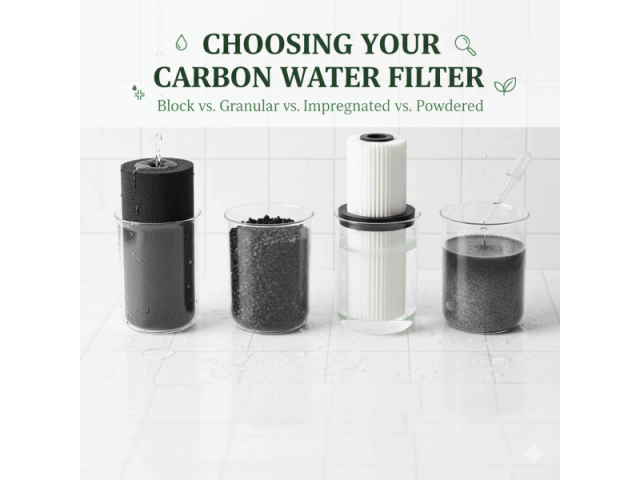
- Overview: Carbon block filters stand out for their solid structure, consisting of a densely packed block of compressed activated carbon. This design provides a large surface area with numerous pores, facilitating effective contaminant removal.
- Filtration Mechanism: As water flows through the solid block, contaminants are adsorbed onto the surface and within the porous structure of the activated carbon. This longer contact time enhances the overall efficiency of the filtration process.
- Advantages: Carbon block filters are known for their comprehensive contaminant removal capabilities, including chlorine, sediment, volatile organic compounds (VOCs), and more. They are ideal for under-sink filtration systems and point-of-use filters.
- Suitability: Suitable for those seeking clean and great-tasting water with a focus on overall water quality improvement.
- Granular Activated Carbon (GAC) Filters:
- Overview: GAC filters consist of loose granules or particles of activated carbon. Unlike carbon block filters, GAC filters do not involve a solid block but utilize loose carbon contained in a filter cartridge or container.
- Filtration Mechanism: Water passes through the loose carbon particles, and contaminants are adsorbed onto the surface of the granules. While effective, the contact time is generally shorter compared to carbon block filters.
- Advantages: GAC filters are suitable for removing chlorine, taste, and odor, making them commonly used in whole-house filtration systems.
- Suitability: Ideal for general-purpose water filtration where the emphasis is on improving taste and removing common water impurities.
- Carbon Impregnated Filters:
- Overview: Carbon impregnated filters involve a substrate material, such as cellulose, impregnated or coated with activated carbon. This design allows for targeted removal of specific contaminants.
- Filtration Mechanism: Contaminants are adsorbed onto the surface of the impregnated carbon, addressing particular water quality concerns.
- Advantages: Suitable for applications where targeted removal of specific contaminants is needed, offering flexibility based on the impregnated carbon's characteristics.
- Suitability: Effective for specific water quality concerns, providing a tailored filtration approach.
- Powdered Activated Carbon (PAC):
- Overview: PAC is a fine powder form of activated carbon, often used in conjunction with other filter media in multi-stage filtration systems.
- Filtration Mechanism: The powdered carbon may be added to water to facilitate adsorption before being filtered out. Its effectiveness depends on the overall design and integration within a filtration system.
- Advantages: PAC can be effective when used strategically in combination with other filter media to address specific contaminants.
- Suitability: Suitable for applications where the integration of fine powdered carbon enhances the overall filtration performance.
Choosing the Right Filter:
To determine the most suitable carbon filter for producing the cleanest water, it's essential to understand your specific water quality needs. Conducting a water quality test to identify the contaminants present in your water supply is a crucial first step. Consider the filtration capabilities of each type of carbon filter, including their micron ratings and the targeted contaminants they address. In many cases, a multi-stage filtration system that combines different filter types may provide the most comprehensive water purification, ensuring that you enjoy clean and refreshing water for your daily needs.
Conclusion:
In the quest for clean and refreshing water, selecting the right carbon water filter is paramount. Each type of carbon filter comes with its unique advantages, and the choice depends on your specific water quality concerns. Whether you opt for the solid structure of carbon block filters, the loose granules of GAC filters, the targeted approach of carbon impregnated filters, or the strategic use of powdered activated carbon, understanding the distinctions will empower you to make an informed decision. With the right carbon water filter in place, you can enjoy the assurance of clean and great-tasting water for a healthier and more satisfying lifestyle.